

This course seeks to address the quantity, complexity, and diversity of the developments in the wastewater treatment profession, particularly in developing countries where access is not readily available to advanced-level courses in wastewater treatment.

Global healthcare leaders must have expertise in leadership management, healthcare finance, and human resource management in order to maintain excellence in service and patient care. The Strategic Healthcare Management course aims to ensure that healthcare leaders have access to the world’s leading practices in complex organizational management and healthcare leadership.
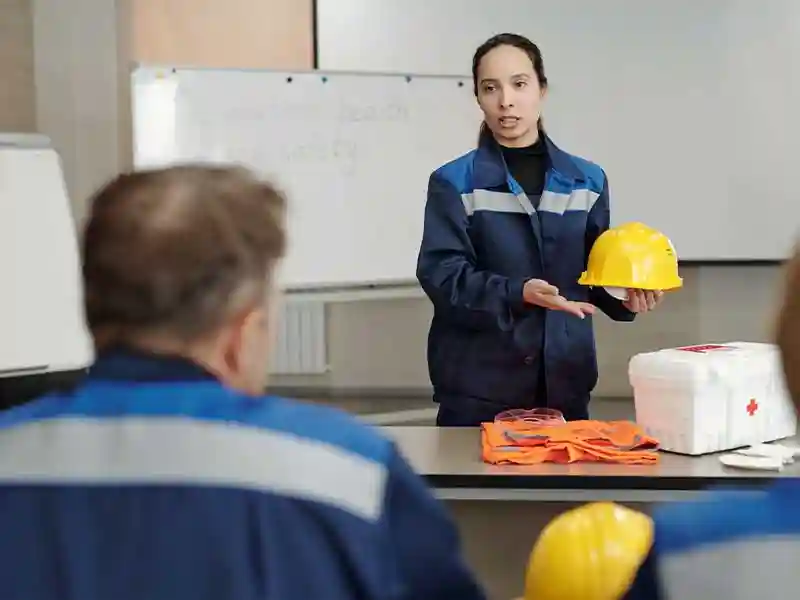
This course provides an understanding of the structure, contents, and applicability of the Occupational Safety and Health Administration (OSHA) standards.

In the last four decades, hostage situations have rapidly increased in the world. Due to the threat of terrorism and other social problems. The goals of hostage-takers are.To achieve certain political, criminal, and/or social benefits through hostage situations. It is not only a police problem but also a governmental problem. Police apply either negotiation or tactical intervention in hostage situations to recover hostages without bloodshed or loss of life. Success in this endeavor is based on effective negotiation. The purposes of this study are to analyze the major actors and their roles in hostage situations, to identify effective negotiation strategies and tools, and to provide some future recommendations for governments, police agencies, and researchers for peaceful resolutions in hostage situations.

Safety Hazards Associated is important to everyone working in the Oil & Gas sector and it has become a core value industry. Safety hazards management systems in the Oil & Gas industry includes corporate HSSE goals, plant operations, application of the safety rules, asset safety inspections and more. This course teaches the fundamentals of supervising the health, safety, security, and environmental aspects of field work in the Oil & Gas Exploration & Production Industry Sector. Participants attending the course will have an overview of the safety and environmental issues in the petroleum industry. It will provide detailed understanding of the methods and techniques to resolve these key issues for making petroleum production and processing, cleaner and safer. This course would educate the participants to identify and assess hazards in any stage of operation, to quantify and manage them as well. This course will also highlight lessons learnt from the past accidents.

You will learn about the Best Worldwide Practices in Power Plant Environmental Technology and Management. Step-by-Step Setting Up a Power Plant Quality Assured Good Environmental Management System.

This course offers an overview of the medical terms, concepts, and language generally used in clinical practice settings. Classes in word construction and definition, pronunciation, Latin language roots, and spelling are designed to provide students with a fundamental knowledge of human anatomical names, diagnostic terms and medical procedures. The course is typically offered at the beginning of the program

Health policy in much of the developed world is concerned with assessing and improving the quality of health care. But how are quality improvements to be wrought in such a complex system as health care? A recent issue of Quality in Health Care was devoted to considerations of organizational change in health care, calling it “the key to quality improvement”.In discussing how such change can be managed, and articles that cultural change needs to be wrought alongside structural reorganization and systems reform to bring about “a culture in which excellence can flourish”. A review of policy changes over the past two decades shows that these appeals for cultural change are not new but have appeared in various guises. However, talk of “culture” and “culture change” begs some difficult questions about the nature of the underlying substrate to which change programs are applied.
Safety is not the prerogative of the safety specialist but also one of the parts in every management discipline. An office manager is no less responsible for the safety of his team than the construction manager. The law and company policy apply equally to both. The course will not turn delegates into safety experts but it will give them the appreciation of what safety issues are about and the methods available to them to ensure that safety is implemented in their workplaces. It is, after all, a manager’s responsibility to have a workplace free of danger and a workforce free of ill health and accidents. Managers will be able to review their departmental systems for safety, introducing new controls or implementing changes as appropriate to ensure safety in the workplace.